A bill has been recently introduced which could result in amateurs losing their currently allocated frequencies on the 70cm band (420-440Mhz). The ARRL is asking that folks write to their legislators to oppose the bill in it's current form. The FCC is proposing to auction off certain spectrum for commercial use to replace the spectrum given up in the 700Mhz band (formerly used for analog TV) to help make up for the loss of commercial revenue in those bands. The spectrum slated for auction is supposed to be existing Public Safety spectrum (since the 700Mhz block went to Public Safety), but the Amateur allocations appear to have been incorrectly bundled in with those from Public Safety. You can read more about this issue at the ARRL website here and you can read how to help here. Please note that they strongly recommend sending letters to their legislative consultants who will hand-deliver them to Congress due to extensive delays in postal mail screening to members of Congress.
Apologies to those of you outside the US who are reading this US-specific posting.
Tuesday, February 22, 2011


Sunday, February 20, 2011
2011 ARRL DX CW Contest
This past weekend was the ARRL DX CW Contest, one of the biggest contests in all of radiosport. The object of this contest is for stations in the US and Canada to contact stations anywhere else. (In this particular contest, there is no credit for US & Canadian stations to work either country). Contestants may use 6 different bands, 10m, 15m, 20m, 40m, 80m, and 160m. As you might have guessed from the name, this is a CW (morse code) only contest. I've done this contest a few times in the past years, and as I've become more comfortable with using CW, I've participated more. The band conditions for this year looked to be pretty good, with the sun finally starting to wake up from the very long trough between solar cycles 23 and 24. The solar flux remained over 100 for the entire contest, and the sunspot number was over 100 as well for a time, then dropped back to around 79. (This will all be gibberish for non-hams, but for contesters and DXers, this is great news.) I figured that I'd try to spend a reasonable amount of time operating this year, and I wound up spending 17 hours (out of the 48 possible) in front of the radio.
I usually try to set some kind of goal to keep me going, though as I've admitted in the past, I tend to do it on the fly; I'll see where I am at some given point and decide "ok, I can make another 30 contacts before turning in for the night" or "I think I can beat last year's score". I really did a lot of "on-the-fly" this year, though I decided after about 3 or 4 hours of operating that I wanted to be sure to beat my score from last year. Last year I wound up with a score of around 160,000 points after deductions for errors, and based on the early going I figured I'd be able to beat that. Not only did I beat it, but I actually doubled it (before error deductions, of course).
The nice thing about the good band conditions were that for the most part, once I could hear a station I had little trouble working them. For some of the big stations that attract a lot of callers, it could be difficult, but I've learned that those guys will be around for the whole contest and it's easier to just move off and work someone else, then come back when things are quieter. This is in contrast to a year or two ago when conditions were so bad that even when the other station heard me, or heard "something", it could take several tries until we were able to both get the correct information that makes up the contact. This time for the most part once the station started a contact with me, we were able to complete it relatively easily. The most significant exception to this was with one station (who I'll put in here when I can figure out who it was ) who spent almost 4 minutes working with me late at night on 80m to complete the contact. (A normal contact takes anywhere from 15 to 30 seconds, tops.)
Although I didn't work any "all-time" new countries, I did pick up a few new band-countries: PJ2, V4, XE, and OM on 160, EU on 80, and J5 on 10. (Interestingly, as I was writing this on Sunday evening, the J5, which is Guinea-Bissau, was spotted on 80m and I was able to work him there as well, post-contest.) I was a little surprised that I only worked 87 different countries given the number of overall contacts that I made, but part of that is accounted for by the fact that I worked many, many stations on 2, 3, 4, 5, and even 6 different bands. (I worked PJ2T and V48M on all six, and I believe that's the first time I've ever worked any station on all six contest bands.)
I did have a small visit from Murphy of course: We've had a couple of very windy days here, and Sharon commented that she thought she hear my antenna (it's actually where the ladder line connects to the coaxial feed line) hitting the roof. (That particular portion of the roof is over the room where the TV is.) Sunday morning I took a look outside and realize that my G5RV had dropped about 10 feet from where it should be, the result of the winds blowing. I have it connected via bungee cords in such a way that they'll take up some slack, but after a while it will drop a bit from the constant "pulling". Fortunately, it was easy to fix and just required a quick trip up the ladder to both ends of the antenna to pull it back up and things were back to normal.
So, now that I've completed this blog entry, that wraps up my post-contest activities, having submitted my log to the ARRL, uploaded my contacts to Logbook of the World, eqsl, and Clublog, and submitted my score to the 3830 contesting reflector.
I usually try to set some kind of goal to keep me going, though as I've admitted in the past, I tend to do it on the fly; I'll see where I am at some given point and decide "ok, I can make another 30 contacts before turning in for the night" or "I think I can beat last year's score". I really did a lot of "on-the-fly" this year, though I decided after about 3 or 4 hours of operating that I wanted to be sure to beat my score from last year. Last year I wound up with a score of around 160,000 points after deductions for errors, and based on the early going I figured I'd be able to beat that. Not only did I beat it, but I actually doubled it (before error deductions, of course).
I should note that this year I entered in the new Single Operator All-Band Assisted Low Power Category (previously any assistance required you to be considered High Power), so comparing this to last year might not be 100% accurate, but I'm still pleased with my showing. I used the packet clusters to help find DX for me, and using the N1MM contesting program, I could easily move from station to station with a couple of keystrokes (or mouse clicks). There was enough activity and the band conditions were good enough that I didn't have to tune for stations which, while perhaps a bit more "pure" (to some) in terms of the contest, dramatically slows things down in a busy contest like this, where I have to find a station, listen to get a callsign and then decide if I need to work that station. (I should say that I always use the packet cluster spots as a guide, since they are notorious for incorrectly identifying stations. If you log the wrong station callsign, it's not only bad for you but also for the station that you contacted.)Band QSOs Mults ------------------- 160: 5 5 80: 53 36 40: 189 67 20: 172 68 15: 81 47 10: 25 19 ------------------- Total: 525 242 Total Score = 381,150
The nice thing about the good band conditions were that for the most part, once I could hear a station I had little trouble working them. For some of the big stations that attract a lot of callers, it could be difficult, but I've learned that those guys will be around for the whole contest and it's easier to just move off and work someone else, then come back when things are quieter. This is in contrast to a year or two ago when conditions were so bad that even when the other station heard me, or heard "something", it could take several tries until we were able to both get the correct information that makes up the contact. This time for the most part once the station started a contact with me, we were able to complete it relatively easily. The most significant exception to this was with one station (who I'll put in here when I can figure out who it was ) who spent almost 4 minutes working with me late at night on 80m to complete the contact. (A normal contact takes anywhere from 15 to 30 seconds, tops.)
Although I didn't work any "all-time" new countries, I did pick up a few new band-countries: PJ2, V4, XE, and OM on 160, EU on 80, and J5 on 10. (Interestingly, as I was writing this on Sunday evening, the J5, which is Guinea-Bissau, was spotted on 80m and I was able to work him there as well, post-contest.) I was a little surprised that I only worked 87 different countries given the number of overall contacts that I made, but part of that is accounted for by the fact that I worked many, many stations on 2, 3, 4, 5, and even 6 different bands. (I worked PJ2T and V48M on all six, and I believe that's the first time I've ever worked any station on all six contest bands.)
I did have a small visit from Murphy of course: We've had a couple of very windy days here, and Sharon commented that she thought she hear my antenna (it's actually where the ladder line connects to the coaxial feed line) hitting the roof. (That particular portion of the roof is over the room where the TV is.) Sunday morning I took a look outside and realize that my G5RV had dropped about 10 feet from where it should be, the result of the winds blowing. I have it connected via bungee cords in such a way that they'll take up some slack, but after a while it will drop a bit from the constant "pulling". Fortunately, it was easy to fix and just required a quick trip up the ladder to both ends of the antenna to pull it back up and things were back to normal.
So, now that I've completed this blog entry, that wraps up my post-contest activities, having submitted my log to the ARRL, uploaded my contacts to Logbook of the World, eqsl, and Clublog, and submitted my score to the 3830 contesting reflector.
Saturday, January 15, 2011
Oh, so that's where you were
Some of you may have noticed that I haven't published anything here for a bit over a month. I was also pretty much absent from several of the other "social web" places that I frequent (Facebook, Twitter, etc.) and in fact got a couple of private notes asking if everything was OK. (Thanks to those who asked for your concern.) The short version is that everything is just fine. Here's the longer version:
Around a week after I published my last update, I managed to come down with a kidney stone just about a year after the last time I had one. I'll skip the details, but suffice it to say that I wasn't very comfortable for a while and blogging, ham radio, and pretty much everything else not essential to feeling better got put aside. Complicating things was the fact that along with Sharon, Justin, and Brett, I was supposed to leave for vacation on the evening of December 25th, and the doctor was pretty adamant that I shouldn't be traveling unless I had passed the stone. Fortunately, it did pass just a couple of days before that, and given everything we had to do before leaving I never had time to do an update.
The trip itself was something we'd planned for a long, long time, figuring that with the kids getting older (they are both in college), it would become increasingly difficult for all of us to get away. Our trip started in Barcelona where we spend three days sightseeing followed by a twelve-day Mediterranean cruise with stops in Palermo, Athens, Rhodes, Alexandria/Cairo, and Malta. I'm not going to go into detail here about the trip, but I did want to post a couple of pictures that are on topic for this blog.
 First, as we were driving from Cairo to the pyramids in Giza, I looked out the window of the bus and saw this antenna. Actually, although I didn't notice it at the time, in addition to the beam that's right in the middle of the picture, there's also what appears to be a wire dipole just to the right of that. Unfortunately, I don't know specifically where this picture was taken other than we were in Cairo at the time, so I don't know who that might belong to. (Any Egyptian hams reading this?)
 I know exactly who the next antenna belongs to: The Malta Amateur Radio League. I know this because just a second or two before I took this picture, we passed a big sign that said "Malta Amateur Radio League". Unfortunately, we were on a bus driving from the city of Mdina to the capital city of Valleta, so I couldn't stop to get a picture of the sign, but I did get a picture of the antenna on the roof of their building. I apologize for the lousy picture but I'm glad that I was able to even get this shot before we had completely driven past. We only had six hours in Malta, so I didn't have a chance to try to get back to the MARL shack to see if there was anyone around, but I can say that Malta was absolutely beautiful and I hope to get back there some day for a longer visit.
I guess I should mention that I didn't do any ham radio while we were away at all. We had a very tight schedule almost everywhere other than some very relaxing days at sea, and given the difficulties of transporting gear with me (in addition to everything else we brought), licensing, and the fact that unfortunately Royal Caribbean Cruise Lines explicitly prohibits the use of ham radio on board the ship, I decided that it didn't make much sense to try to operate. As a result, it was just over a month between the last HF contact I made in December (before I was ill), and the next one that I made in January after I returned.
Around a week after I published my last update, I managed to come down with a kidney stone just about a year after the last time I had one. I'll skip the details, but suffice it to say that I wasn't very comfortable for a while and blogging, ham radio, and pretty much everything else not essential to feeling better got put aside. Complicating things was the fact that along with Sharon, Justin, and Brett, I was supposed to leave for vacation on the evening of December 25th, and the doctor was pretty adamant that I shouldn't be traveling unless I had passed the stone. Fortunately, it did pass just a couple of days before that, and given everything we had to do before leaving I never had time to do an update.
The trip itself was something we'd planned for a long, long time, figuring that with the kids getting older (they are both in college), it would become increasingly difficult for all of us to get away. Our trip started in Barcelona where we spend three days sightseeing followed by a twelve-day Mediterranean cruise with stops in Palermo, Athens, Rhodes, Alexandria/Cairo, and Malta. I'm not going to go into detail here about the trip, but I did want to post a couple of pictures that are on topic for this blog.
 First, as we were driving from Cairo to the pyramids in Giza, I looked out the window of the bus and saw this antenna. Actually, although I didn't notice it at the time, in addition to the beam that's right in the middle of the picture, there's also what appears to be a wire dipole just to the right of that. Unfortunately, I don't know specifically where this picture was taken other than we were in Cairo at the time, so I don't know who that might belong to. (Any Egyptian hams reading this?)
I guess I should mention that I didn't do any ham radio while we were away at all. We had a very tight schedule almost everywhere other than some very relaxing days at sea, and given the difficulties of transporting gear with me (in addition to everything else we brought), licensing, and the fact that unfortunately Royal Caribbean Cruise Lines explicitly prohibits the use of ham radio on board the ship, I decided that it didn't make much sense to try to operate. As a result, it was just over a month between the last HF contact I made in December (before I was ill), and the next one that I made in January after I returned.
Sunday, December 12, 2010
With a little help from my friends, Part II
You might want to read Part I of this if you haven't done so already. It'll be a lot less confusing that way.
 After we got the far-end rope over the correct limb, we tied off one end of the new G5RV and pulled it up in the air a bit just to make sure that we didn't run into any unexpected issues. That went well, so we moved to the near-end tree to attach the other end to that rope, which I'd lowered before David and Matthew arrived. We attached the other end of the G5RV to the rope and I started to pull it up, but the insulator at the end snagged on a branch and we couldn't get the antenna up nearly high enough. We dropped the antenna down to the ground and tried to use the rope itself as a kind of saw to see if we could break off the very small branch that was causing the problem. After about 5 or 10 minutes, we realized that 1) It was getting dark enough that we were having trouble seeing where the rope was going, and 2) The cold wind that had been blowing all afternoon wasn't stopping, and with the lack of sun it had gone from chilly to "ok, we've just about had enough of this" cold. It was time for plan B.
Several years ago, when having some work done on that "near-end" tree, I had the tree service put a pulley with some rope as high as they could up in the tree. I've played with it a few times trying some wire antennas, but hadn't used it at all for the last year or two. I figured that at least temporarily we could attach the remaining end of the G5RV to that rope to get it up into the air. If needed, Matthew could come back another time and try to get a rope over a higher branch with the potato gun, but there wasn't enough light to try that. (The reason why I didn't want to use the pulley permanently was because it wasn't all that high up in the tree, plus I didn't want to lose the use of that for any future experiments.) That worked out pretty well, and David, K2DSL, was nice enough to volunteer to head up to the roof to connect the antenna to the feedline. Next, it was into the shack to see if the antenna would load up (and to warm up!), which it did. I made sure that the tuner would be able to find a match as it had with the old antenna and was able to do so on all bands. By that point, we were all exhausted and cold, so after thanking Matthew and David they left. I did a little cleanup outside and headed in. I made one quick QSO (KP2B on 40m CW) just to make sure that the antenna actually worked, then headed out for dinner with Sharon.
The next morning I figured that I'd see what things actually looked like, and I was disappointed when I realized that the antenna was even lower than I'd thought. The pulley just wasn't very high up in the tree, and my G5RV was nowhere near a "flat-top" installation. I figured that I'd take a look at the other rope to see if I could do anything with it, hoping that perhaps "something" had happened overnight that might allow me to use it instead of the lower-than-expected pulley rope. It seems that I finally got a little break: I got both ends of the old rope and pulled back and forth to see if the resistance caused by that little branch was any less. As soon as I did, I saw a small piece of ice drop off from where the rope was wrapped around the branch, followed by a small piece of a branch. I think that what happened was that the rope rubbing the night before had allowed some sap to get onto the branch, which froze overnight and must have caused the branch to break. As a result, the little branch that was not allowing the insulator to move when pulled up into the tree was no longer in the way.
I dropped down the antenna from the "pulley rope" (which required me to toss the throw bag over the antenna wire, and carefully pull it down) and attached it to the older rope, and pulled it up. It took a little bit of work, but I was able to get it back up to nearly the original height. I spent about another 30 minutes more permanently tying off the ends of the rope, including connecting the ends to bungee cords that I use as shock absorbers before heading inside. I was able to make a few DX contacts on several bands, and in the week since then, I've actually picked up a couple of new countries on 80m (Iceland and Faroe Islands) as well as some new bands or modes for other countries (Congo on 20m phone and CW and 17m RTTY, Gabon on 20m CW, and Dominica on 40m RTTY, among others), so I guess the antenna is working well.
I'm still not very happy with the mechanical connections, and in particular, the connection from the ladderline to the coax feedline. I don't think they are nearly as sturdy as the antenna that I replaced, but I hope that what's there now will work out until the spring. At that point I want to replace some of what I think are the weak points with something sturdier. I may also look into other types of antennas, but for now, I'm very happy to be back on the air.

Several years ago, when having some work done on that "near-end" tree, I had the tree service put a pulley with some rope as high as they could up in the tree. I've played with it a few times trying some wire antennas, but hadn't used it at all for the last year or two. I figured that at least temporarily we could attach the remaining end of the G5RV to that rope to get it up into the air. If needed, Matthew could come back another time and try to get a rope over a higher branch with the potato gun, but there wasn't enough light to try that. (The reason why I didn't want to use the pulley permanently was because it wasn't all that high up in the tree, plus I didn't want to lose the use of that for any future experiments.) That worked out pretty well, and David, K2DSL, was nice enough to volunteer to head up to the roof to connect the antenna to the feedline. Next, it was into the shack to see if the antenna would load up (and to warm up!), which it did. I made sure that the tuner would be able to find a match as it had with the old antenna and was able to do so on all bands. By that point, we were all exhausted and cold, so after thanking Matthew and David they left. I did a little cleanup outside and headed in. I made one quick QSO (KP2B on 40m CW) just to make sure that the antenna actually worked, then headed out for dinner with Sharon.
The next morning I figured that I'd see what things actually looked like, and I was disappointed when I realized that the antenna was even lower than I'd thought. The pulley just wasn't very high up in the tree, and my G5RV was nowhere near a "flat-top" installation. I figured that I'd take a look at the other rope to see if I could do anything with it, hoping that perhaps "something" had happened overnight that might allow me to use it instead of the lower-than-expected pulley rope. It seems that I finally got a little break: I got both ends of the old rope and pulled back and forth to see if the resistance caused by that little branch was any less. As soon as I did, I saw a small piece of ice drop off from where the rope was wrapped around the branch, followed by a small piece of a branch. I think that what happened was that the rope rubbing the night before had allowed some sap to get onto the branch, which froze overnight and must have caused the branch to break. As a result, the little branch that was not allowing the insulator to move when pulled up into the tree was no longer in the way.
I dropped down the antenna from the "pulley rope" (which required me to toss the throw bag over the antenna wire, and carefully pull it down) and attached it to the older rope, and pulled it up. It took a little bit of work, but I was able to get it back up to nearly the original height. I spent about another 30 minutes more permanently tying off the ends of the rope, including connecting the ends to bungee cords that I use as shock absorbers before heading inside. I was able to make a few DX contacts on several bands, and in the week since then, I've actually picked up a couple of new countries on 80m (Iceland and Faroe Islands) as well as some new bands or modes for other countries (Congo on 20m phone and CW and 17m RTTY, Gabon on 20m CW, and Dominica on 40m RTTY, among others), so I guess the antenna is working well.
I'm still not very happy with the mechanical connections, and in particular, the connection from the ladderline to the coax feedline. I don't think they are nearly as sturdy as the antenna that I replaced, but I hope that what's there now will work out until the spring. At that point I want to replace some of what I think are the weak points with something sturdier. I may also look into other types of antennas, but for now, I'm very happy to be back on the air.
Thursday, December 09, 2010
With a little help from my friends, Part I
As I wrote about last week, my G5RV antenna came down as the result of a storm. My original plan was to try to repair the existing antenna, but after examining it further, I decided that I'd be better off buying a replacement which is exactly what I did. (I'll look at fixing the old one one of these days.) Matthew, K2NUD, and David, K2DSL, volunteered to come over last Saturday to help me get the antenna up in air, so we planned to meet at my house at around 2:30 which would give me enough time to run out to KJI Electronics to pick up the new antenna. The one that they had in stock from from MFJ and while it didn't seem to be build as sturdily as what I'd had in the air, I figured that getting some copper in the air was better than nothing.
The old antenna was suspended between two trees with the farthest end being at probably 60 or 70 feet in the air. (I'm terrible at estimating height, but I know that it's significantly higher than the roof of my house, which is at about 35 feet or so.) The antenna snapped at the far end, leaving the line suspending it about 50 feet in the air and somewhat tangled in the branches. As a result, it wasn't possible to get to that rope to re-use it, so Matthew came up with a better plan: a potato gun. The link tells you lots about potato guns, but in a nutshell, this is a gun made from PVC pipe that's used to fire a potato. (Why would you do that? Because it's unbelievably fun!) In order to get the potato to do something other than just shoot up in the air (and make a pretty cool sound), we put the throw bag which trailed 100 feet of line on top of the potato which worked like a champ.
 The way the potato gun works is that you put the "fuel" (old-fashioned non-environmentally friendly Aqua-Net hairspray) into a chamber and ignite it which forces a potato, previously jammed down the barrel, up and out of the barrel at a pretty high rate of speed. In the picture here, Matthew (green jacket) is holding the gun while I spray in the "fuel" into the combustion chamber. That's David on the left. Somewhere out there I'm sure someone has done some calculations about amount of force that's being generated to launch the potato that far (not to mention the added one-pound throw bag), but physics aside, as I mentioned earlier, it's fun to watch.
It took a few tries, but Matthew managed to get the line over the right branch, which is a lot more difficult than it sounds. Although made somewhat easier by the fact that there are no leaves on the trees at this time of the year, it's still a lot like threading a needle that's about 50 feet away and 75 feet in the air. We came close a couple of times, but Matthew wanted to keep trying to get it exactly right, which I think was an excuse to fire off a few more shots. There's more to the story which I'll talk about in Part II, but here's a video taken by my son Justin during one of the "firings". (If you're reading this in an RSS reader or email and can't see the video, you click here to go directly to the video on YouTube.)
 |
| Throw bag |
The old antenna was suspended between two trees with the farthest end being at probably 60 or 70 feet in the air. (I'm terrible at estimating height, but I know that it's significantly higher than the roof of my house, which is at about 35 feet or so.) The antenna snapped at the far end, leaving the line suspending it about 50 feet in the air and somewhat tangled in the branches. As a result, it wasn't possible to get to that rope to re-use it, so Matthew came up with a better plan: a potato gun. The link tells you lots about potato guns, but in a nutshell, this is a gun made from PVC pipe that's used to fire a potato. (Why would you do that? Because it's unbelievably fun!) In order to get the potato to do something other than just shoot up in the air (and make a pretty cool sound), we put the throw bag which trailed 100 feet of line on top of the potato which worked like a champ.

It took a few tries, but Matthew managed to get the line over the right branch, which is a lot more difficult than it sounds. Although made somewhat easier by the fact that there are no leaves on the trees at this time of the year, it's still a lot like threading a needle that's about 50 feet away and 75 feet in the air. We came close a couple of times, but Matthew wanted to keep trying to get it exactly right, which I think was an excuse to fire off a few more shots. There's more to the story which I'll talk about in Part II, but here's a video taken by my son Justin during one of the "firings". (If you're reading this in an RSS reader or email and can't see the video, you click here to go directly to the video on YouTube.)
Thursday, December 02, 2010
Tree: 1 G5RV: 0
 It was bound to happen sooner or later, but that doesn't really make it feel any better. At the edge of my backyard there is a tree that I was pretty sure had died (given the lack of leaves through the past spring and summer), and I'd planned on having a tree service look at it next spring. A series of rainstorms with a lot of wind passed through my part of the world yesterday (I'll bet you can guess where this is going). One of the three small trunks from that dead tree snapped off about 8 feet in the air and fortunately fell parallel to my house so the house was OK. Unfortunately, my G5RV antenna passed through the upper branches of the tree and unsurprisingly was unable to withstand the force of the falling tree. The image you see to the right is a piece of one of the wire legs that use to be up in the air. It is, alas, no longer up in the air.
For at least the short-term, I am going to try to salvage what's there. Although this has been up in the air for over 10 years (I didn't think it was that long, but I realized that every HF QSO that I've made from my home station starting in August 2000 has been on that antenna) the other parts of the antenna seem to be in fine shape. (And it was certainly working very well until it came down.) The G5RV is, without question, a compromise antenna, but in the 10 years that I've been using it I've managed to work all states, all zones, and gotten DXCC on all bands from 10m to 80m (I still need a few more confirmations for 30m) and on all three modes, and have worked 300+ DXCC entities using this compromise. Would I like a tower with a nice Steppir on it? Sure, but that's not happening anytime soon, so I'll stick to what I know works. I have another G5RV that a friend gave me before he moved out of the country, and while I need to verify that the wire is the correct length, it's been sitting in my garage out of the elements and the wire legs look like perfect candidates for a "transplant". The big advantage of repairing what's there is that it will be zero cost and with a little luck, I should be able to get it done over the weekend.
If I can't repair it for whatever reason, then most likely I'll run over to KJI Electronics and pick up a new one and put it up in the same place. I have discussed with some friends the possibility of replacing this with something like an Alpha-Delta DX-CC or possibly even an Alpha-Delta DX-LB Plus (I have the horizontal room, the question is whether I can get it high up enough to function properly), but for now I think I'm going to stick with what I know works.
I hope to have an update with good news soon, stay tuned.
Sunday, November 21, 2010
In contrast
In contrast to my giving up the frequency for a DX station while in the middle of a "run" during a contest (as I recently mentioned), I heard a particularly bad bit of operating on last Sunday while trying to work Bob, VP8LP in the Falkland Islands. I've worked Bob before on several bands but needed a contact from him on 15m. He had an excellent signal and was steadily working stations, the vast majority of which were good operators, standing by when Bob was working another station and not responding when Bob wasn't calling them. (Please see my post about The DX Code of Conduct if you haven't already.) There was, unfortunately, one exception to the "good guys" on the frequency.
As Bob was steadily working the pile, a ham started calling K7NRA on the frequency. After he did this once or twice, assuming that perhaps he was unaware that there was another station on the frequency, I responded to him and said that the frequency was in use and gave my callsign. (The other ham was using his callsign, or what I presume was his, though I neglected to note it. While normally I don't like to "pick on" people in a public forum, what was going on was heard by dozens of other hams, and if I could remember what it was, I'd post it here.) The other ham said "Well, there's supposed to be a special event for K7NRA on this frequency and I'm going to call him, this is his announced frequency".
It was pretty clear that the guy calling wasn't hearing K7NRA, and aside from that fact that he refused to stop interfering with an active frequency, his general technique was awful. He was calling "blind" (meaning he didn't hear the other station), and kept calling "CQ CQ CQ CQ CQ CQ K7NRA", which doesn't actually make a lot of sense. CQ generally means "calling all stations", thus saying "CQ K7NRA" means "calling all stations with a callsign of K7NRA"; by definition there will only be one. There are exceptions to using a "directed CQ", such as when calling "CQ DX" (looking for any DX station) or "CQ NJ" (looking for a station in New Jersey), but proper procedure when calling a particular station is to simply call the station. If I were to call that station, I'd say "K7NRA this is K2DBK" or, if K7NRA was listening for other stations, I would likely just give my callsign only.
Several other stations responded to the caller (some more politely, and some, unfortunately much less so), and he refused to move, insisting that he had "as much right to the frequency as anyone". Unless he had an emergency (which clearly was not the case), what he said was not true. The FCC rules governing the amateur radio service state that nobody can "own" a particular frequency (including by "publishing" use of a particular frequency at a particular time), and further, if any frequency is in use, with the exception of use in an emergency, nobody is required to relinquish the frequency for another station. Thus, the caller was not only wrong, but he was violating the rule that says "No amateur operator shall willfully or maliciously interfere with or cause interference to any radio communication or signal."
The guy would not give up, and continued to attempt to call K7NRA repeatedly. The worst of it was when one station was speaking with Bob, and was showing ham radio to a young Boy Scout for the first time. All the others stations on the frequency patiently stood by while Bob spoke with the youngster, all except the guy calling K7NRA, who simply wouldn't stop. Several hams were telling him (in language that probably violated another part of the FCC rules) exactly what they thought of him, to no avail. While this was happening, it occurred to me what a terrible impression this was making on the young Scout. Is this how we want to entice others into our hobby?
After the contact with the scout was over, Bob, who could hear the guy calling the K7 station, finally said "The station calling CQ, this is VP8LP, please go ahead". That did the trick, the station stopped calling. Bob called several more times with no response, and finally said "well, I guess I've figured out how to shut him up!" and went back to working the pileup.
I would like to say that Bob's comment had a permanent effect, but unfortunately that was not the case. The caller kept coming back, Bob would respond to the "gentleman calling CQ", which would usually shut him up for a while, and so on. This went on for a while, with the occasional argument back and forth between the guy calling K7 and others on the frequency, until finally propagation changed enough that he was no longer heard on the frequency.
After this was over, I did a little research to see what "special event" he was talking about, since an initial check of the spot clusters didn't show any activity for K7NRA. After a little digging I discovered that in fact the Yavapai Amateur Radio Club was, in fact, doing a special event to celebrate the "birthday" of the NRA, as described on their website. The frequency occupied by VP8LP was also one of the frequencies advertised (21.355mHz), but what our caller failed to notice was that the event was scheduled for the 17th of November, not the 14th of November, when this all occurred. This caller was not only wrong from a legal and ethical standpoint, he managed to get a lot of people annoyed at him by trying to work an activity that wasn't even happening. As they say, you can't outlaw stupidity.
As Bob was steadily working the pile, a ham started calling K7NRA on the frequency. After he did this once or twice, assuming that perhaps he was unaware that there was another station on the frequency, I responded to him and said that the frequency was in use and gave my callsign. (The other ham was using his callsign, or what I presume was his, though I neglected to note it. While normally I don't like to "pick on" people in a public forum, what was going on was heard by dozens of other hams, and if I could remember what it was, I'd post it here.) The other ham said "Well, there's supposed to be a special event for K7NRA on this frequency and I'm going to call him, this is his announced frequency".
It was pretty clear that the guy calling wasn't hearing K7NRA, and aside from that fact that he refused to stop interfering with an active frequency, his general technique was awful. He was calling "blind" (meaning he didn't hear the other station), and kept calling "CQ CQ CQ CQ CQ CQ K7NRA", which doesn't actually make a lot of sense. CQ generally means "calling all stations", thus saying "CQ K7NRA" means "calling all stations with a callsign of K7NRA"; by definition there will only be one. There are exceptions to using a "directed CQ", such as when calling "CQ DX" (looking for any DX station) or "CQ NJ" (looking for a station in New Jersey), but proper procedure when calling a particular station is to simply call the station. If I were to call that station, I'd say "K7NRA this is K2DBK" or, if K7NRA was listening for other stations, I would likely just give my callsign only.
Several other stations responded to the caller (some more politely, and some, unfortunately much less so), and he refused to move, insisting that he had "as much right to the frequency as anyone". Unless he had an emergency (which clearly was not the case), what he said was not true. The FCC rules governing the amateur radio service state that nobody can "own" a particular frequency (including by "publishing" use of a particular frequency at a particular time), and further, if any frequency is in use, with the exception of use in an emergency, nobody is required to relinquish the frequency for another station. Thus, the caller was not only wrong, but he was violating the rule that says "No amateur operator shall willfully or maliciously interfere with or cause interference to any radio communication or signal."
The guy would not give up, and continued to attempt to call K7NRA repeatedly. The worst of it was when one station was speaking with Bob, and was showing ham radio to a young Boy Scout for the first time. All the others stations on the frequency patiently stood by while Bob spoke with the youngster, all except the guy calling K7NRA, who simply wouldn't stop. Several hams were telling him (in language that probably violated another part of the FCC rules) exactly what they thought of him, to no avail. While this was happening, it occurred to me what a terrible impression this was making on the young Scout. Is this how we want to entice others into our hobby?
After the contact with the scout was over, Bob, who could hear the guy calling the K7 station, finally said "The station calling CQ, this is VP8LP, please go ahead". That did the trick, the station stopped calling. Bob called several more times with no response, and finally said "well, I guess I've figured out how to shut him up!" and went back to working the pileup.
I would like to say that Bob's comment had a permanent effect, but unfortunately that was not the case. The caller kept coming back, Bob would respond to the "gentleman calling CQ", which would usually shut him up for a while, and so on. This went on for a while, with the occasional argument back and forth between the guy calling K7 and others on the frequency, until finally propagation changed enough that he was no longer heard on the frequency.
After this was over, I did a little research to see what "special event" he was talking about, since an initial check of the spot clusters didn't show any activity for K7NRA. After a little digging I discovered that in fact the Yavapai Amateur Radio Club was, in fact, doing a special event to celebrate the "birthday" of the NRA, as described on their website. The frequency occupied by VP8LP was also one of the frequencies advertised (21.355mHz), but what our caller failed to notice was that the event was scheduled for the 17th of November, not the 14th of November, when this all occurred. This caller was not only wrong from a legal and ethical standpoint, he managed to get a lot of people annoyed at him by trying to work an activity that wasn't even happening. As they say, you can't outlaw stupidity.
Sunday, November 14, 2010
2010 ARRL CW Sweepstakes
Last weekend I spent about 13 hours or so participating in the ARRL CW Sweepstakes contest. The last time I participated in this contest was in 2008, and although I started out slowly, I managed to finish with a final score just a bit higher than the 2008 effort. In 2008, I had 333 QSOs in about 15 1/2 hours with 79 out of the 80 possible multipliers, missing only NT (Northwest Territories in Canada) for a score of 52,614 points. This year, in 13 hours, I had 376 QSOs missing 3 multipliers (Nebraska, which I heard, but couldn't work, South Bay, which I heard once, and didn't work, and Newfoundland/Labrador, which I never heard), giving me a total of 57,904 points. Considering that I had fewer multipliers and a higher score in a shorter amount of time, I was pretty happy.
I didn't try to "run" stations at all for the first day of the contest, there was just too much competition, but later on when things quieted down I was able to get run frequencies on 40m and 80m from time to time and really enjoyed working the stations calling. I did have a couple of things happen while running on 80m that I thought were noteworthy. First, in the middle of my run I got called by W1AW, the Hiram Percy Maxim Memorial station located at ARRL Headquarters. Although I've had contact with W1AW many times (they are not very far from here so are very easy to work on the lower bands), and have even operated from that station myself, it's always fun to make contact with them, and even more special when they call me (rather than the other way around). The other thing that happened was that a bit later I was running on another 80m frequency at the bottom of the band (3.505mhz) and a station called and asked if I would QSY (change frequencies) because a DX station (5R8Z, I believe) was about to come on the air and that was the frequency that he'd announced he'd be moving to. I moved right away, because even though legally, since I was there first I could stay, it was in the "ham spirit" to move so that others could contact that DX station. (Frankly, I would have been very happy to make that contact myself, but I never heard him.) In any case, it was the right thing to do, and I was happy to do it.
I didn't try to "run" stations at all for the first day of the contest, there was just too much competition, but later on when things quieted down I was able to get run frequencies on 40m and 80m from time to time and really enjoyed working the stations calling. I did have a couple of things happen while running on 80m that I thought were noteworthy. First, in the middle of my run I got called by W1AW, the Hiram Percy Maxim Memorial station located at ARRL Headquarters. Although I've had contact with W1AW many times (they are not very far from here so are very easy to work on the lower bands), and have even operated from that station myself, it's always fun to make contact with them, and even more special when they call me (rather than the other way around). The other thing that happened was that a bit later I was running on another 80m frequency at the bottom of the band (3.505mhz) and a station called and asked if I would QSY (change frequencies) because a DX station (5R8Z, I believe) was about to come on the air and that was the frequency that he'd announced he'd be moving to. I moved right away, because even though legally, since I was there first I could stay, it was in the "ham spirit" to move so that others could contact that DX station. (Frankly, I would have been very happy to make that contact myself, but I never heard him.) In any case, it was the right thing to do, and I was happy to do it.
Sunday, October 31, 2010
A little contesting this weekend
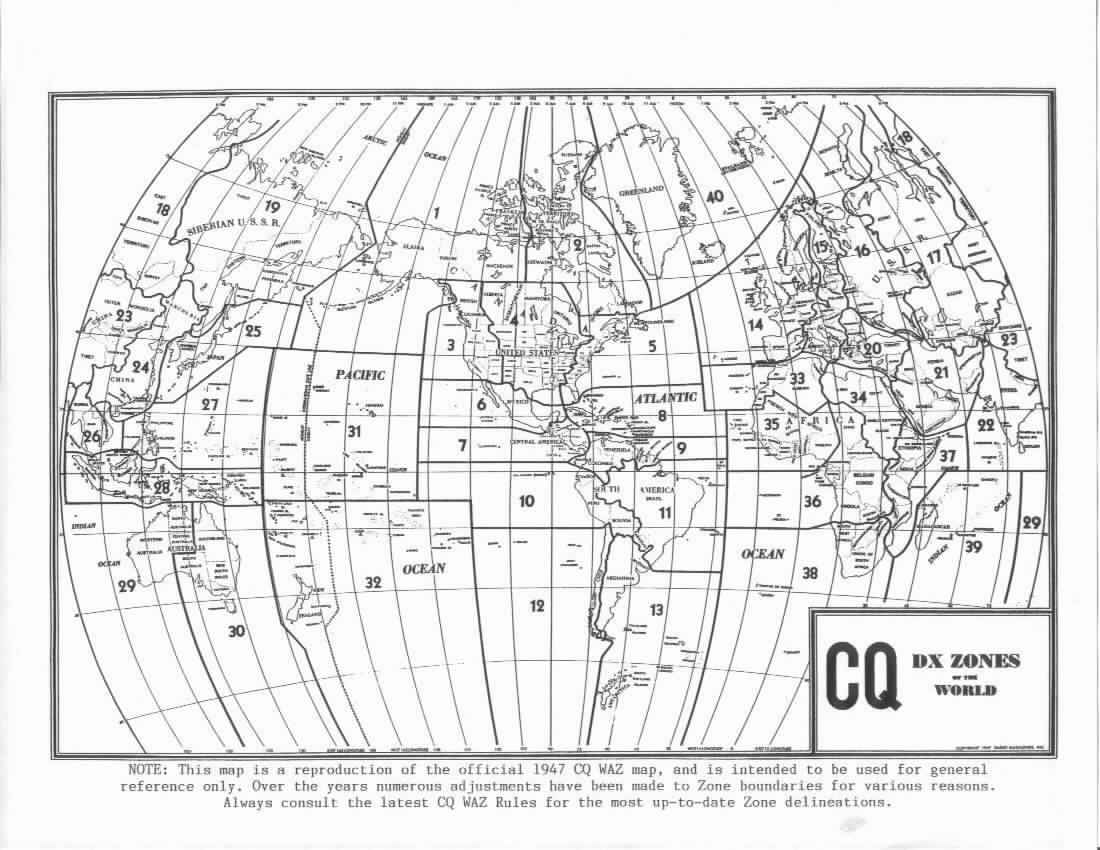
I spent about 10 hours Saturday and Sunday making some contacts in the CQ WW SSB contest. This is one of the biggest contests, where the goal is to work stations, for the most part, outside of your own country. You get two points for working a station on your own continent (if you're in North America, one point elsewhere) and three points for working stations on another continent. There are also multipliers for each different country and CQ Zone that you contact. As with other contests, your score is computed by multiplying the number of points by the multipliers. World-class competition stations typically have scores in the millions or even tens of millions for the high-power multi-operator stations. My score was quite a bit more modest, just a bit under 115,000 points. That beats my score from last year, though I've done better in the past. (Though I've also spent more time in the past.)
This isn't one of my favorite contests specifically because it is so popular. Because it is so popular, there are almost always a lot of stations calling, which makes it harder for a small station like mine to be heard. As a result, stations that I'm hearing very well just can't hear me, and it often took several minutes to work stations that under non-contest conditions could be very easy. In a lot of cases, I'd just give up and move on, sometimes coming back to try to work the stations again later.
Partway into the contest, I came up with a technique that made things a little less frustrating: I intentionally made my station "hard of hearing". Normally, although I've got a very modest antenna (my G5RV), my radio is quite good at pulling in relatively weak stations. However, in this case, there was little point in trying to work very weak stations because they weren't going to hear me. What I did was to turn off any pre-amplification (kind of like a "hearing aid") for all bands, and on some bands (particularly 40m and 80m), I put in 8db or more of attenuation. (Kind of like putting in earplugs.) There were still plenty of stations to hear, and with my self-imposed handicap, I found that I was a lot more likely to work these stations.
This technique isn't something that I'd normally recommend, but for this particular contest, it kept me from wasting time on stations that I really had no chance of working.
Here's my score breakdown for the contest. One interesting thing is that this is one of a very few contests where I've actually worked stations on all six possible HF bands.
This isn't one of my favorite contests specifically because it is so popular. Because it is so popular, there are almost always a lot of stations calling, which makes it harder for a small station like mine to be heard. As a result, stations that I'm hearing very well just can't hear me, and it often took several minutes to work stations that under non-contest conditions could be very easy. In a lot of cases, I'd just give up and move on, sometimes coming back to try to work the stations again later.
Partway into the contest, I came up with a technique that made things a little less frustrating: I intentionally made my station "hard of hearing". Normally, although I've got a very modest antenna (my G5RV), my radio is quite good at pulling in relatively weak stations. However, in this case, there was little point in trying to work very weak stations because they weren't going to hear me. What I did was to turn off any pre-amplification (kind of like a "hearing aid") for all bands, and on some bands (particularly 40m and 80m), I put in 8db or more of attenuation. (Kind of like putting in earplugs.) There were still plenty of stations to hear, and with my self-imposed handicap, I found that I was a lot more likely to work these stations.
This technique isn't something that I'd normally recommend, but for this particular contest, it kept me from wasting time on stations that I really had no chance of working.
Here's my score breakdown for the contest. One interesting thing is that this is one of a very few contests where I've actually worked stations on all six possible HF bands.
My total score was 114, 654 points, which, as always, is subject to adjustment for any errors that I (probably) made.
Band QSOs Pts Cty ZN
1.8 2 2 2 2
3.5 22 50 17 11
7 62 172 39 12
14 87 223 45 18
21 45 113 25 16
28 8 22 7 3
Total 226 582 135 62
Thursday, October 21, 2010
A meta-post
This is a short meta-post. That is, it's a post about my posts. Actually, it's a post about some responses that I've been getting to my posts. In my recent post about how the pileups for some of the PJ stations were huge, Bill, W9VA, who was the operator at PJ2T at the time that I posted the image of my bandscope, comments about what it was like on the other end of the pileup.
On my soapbox post about how people don't seem to listen, I got a bunch of comments. Most of them were agreements with my thoughts (including a rather astonishing anecdote from Ed, N4EMG). There was also a comment from Jeremy, KB7QOA, who mentions that he hasn't jumped into the piles because he hasn't learned how to operate split on his radio. David, K2DSL, responded with detailed instructions, which really demonstrates the ham spirit.
As an aside, the reason why I'm mentioning these comments is because Blogger, the platform that I use for blogging, doesn't support an easy way for folks to see comments that have been posted after they've read an entry, and I wanted to make sure that my readers had the opportunity to see them. If you've commented recently, or even not so recently, and I didn't mention it, please don't take it personally. I do read and usually reply to most comments here and they are greatly appreciated.
Thanks for everyone for contributing.
On my soapbox post about how people don't seem to listen, I got a bunch of comments. Most of them were agreements with my thoughts (including a rather astonishing anecdote from Ed, N4EMG). There was also a comment from Jeremy, KB7QOA, who mentions that he hasn't jumped into the piles because he hasn't learned how to operate split on his radio. David, K2DSL, responded with detailed instructions, which really demonstrates the ham spirit.
As an aside, the reason why I'm mentioning these comments is because Blogger, the platform that I use for blogging, doesn't support an easy way for folks to see comments that have been posted after they've read an entry, and I wanted to make sure that my readers had the opportunity to see them. If you've commented recently, or even not so recently, and I didn't mention it, please don't take it personally. I do read and usually reply to most comments here and they are greatly appreciated.
Thanks for everyone for contributing.
Tuesday, October 19, 2010
C'mon people, listen!
A lot has been written recently (including by me) about the general conduct of hams on the airwaves. Over the last few days, I've seen something that has just been so absurd that I had to vent here.
I've discussed operating in pileups before, and how it's important to listen to the operator's instructions to understand where they are listening. It's frustrating when an operator doesn't listen and calls right on top of the DX station instead of on his split frequency. While there's really no excuse, the occasional call or two can be understood by operators who just send 5NN TU (on CW) or just "Thanks" on phone without giving the split often. The same can be said for those operators who don't ID often.
What I cannot understand, and to me what's totally inexcusable was the behavior that I've seen on RTTY in the pileups for the folks operating from the new PJ entities recently. The vast majority of operators at the DX end seem to be really top-notch operators and are doing their best to control the pileup. They leave nothing to chance when, at the end of a contact, they send something like "K2DBK TU DE PJ7E UP 2-4". You know who the station is, and you know that they are listening for your transmission 2-4 up. In spite of this, operators repeatedly (and I don't mean once or twice, but dozens of times) continue to call on the operators transmit frequency, not where he's listening.
I believe in Heinlein's Razor: Never attribute to malice that which is adequately explained by stupidity. I don't believe that most of these operators are calling just to QRM (create noise) on the DX station. For one thing, they are all using their callsigns, so we know who they are. (There is a chance that they are using someone else's callsign to intentionally make them look bad, but I don't think that's the case.) I think that either they don't have a good enough copy on on the DX station to be able to understand that he's listening on a different frequency, or they don't understand what "UP" means. In the former case, they shouldn't be calling at all. If you don't have a good enough copy on a station to receive what they are sending, how on earth are you going to know if you've worked them? If it's the latter, and you don't know that "UP" means that the operator is working stations using split operation, then ask someone what it means, don't just ignore it.
Incidentally, I want to mention that I've looked up a number of callsigns that are guilty of this behavior. There is a mix of stations, but a significant number of stations seem to be US Amateur Extra class, and, as best I can tell, they have been Extras for quite some time. This isn't a case of "no-coders" not knowing how to operate. It may well be that RTTY, which has increased in popularity recently, is new to these operators, but like any mode you need to learn how to use it.
When in doubt, refer to the DX Code of Conduct.
I've discussed operating in pileups before, and how it's important to listen to the operator's instructions to understand where they are listening. It's frustrating when an operator doesn't listen and calls right on top of the DX station instead of on his split frequency. While there's really no excuse, the occasional call or two can be understood by operators who just send 5NN TU (on CW) or just "Thanks" on phone without giving the split often. The same can be said for those operators who don't ID often.
What I cannot understand, and to me what's totally inexcusable was the behavior that I've seen on RTTY in the pileups for the folks operating from the new PJ entities recently. The vast majority of operators at the DX end seem to be really top-notch operators and are doing their best to control the pileup. They leave nothing to chance when, at the end of a contact, they send something like "K2DBK TU DE PJ7E UP 2-4". You know who the station is, and you know that they are listening for your transmission 2-4 up. In spite of this, operators repeatedly (and I don't mean once or twice, but dozens of times) continue to call on the operators transmit frequency, not where he's listening.
I believe in Heinlein's Razor: Never attribute to malice that which is adequately explained by stupidity. I don't believe that most of these operators are calling just to QRM (create noise) on the DX station. For one thing, they are all using their callsigns, so we know who they are. (There is a chance that they are using someone else's callsign to intentionally make them look bad, but I don't think that's the case.) I think that either they don't have a good enough copy on on the DX station to be able to understand that he's listening on a different frequency, or they don't understand what "UP" means. In the former case, they shouldn't be calling at all. If you don't have a good enough copy on a station to receive what they are sending, how on earth are you going to know if you've worked them? If it's the latter, and you don't know that "UP" means that the operator is working stations using split operation, then ask someone what it means, don't just ignore it.
Incidentally, I want to mention that I've looked up a number of callsigns that are guilty of this behavior. There is a mix of stations, but a significant number of stations seem to be US Amateur Extra class, and, as best I can tell, they have been Extras for quite some time. This isn't a case of "no-coders" not knowing how to operate. It may well be that RTTY, which has increased in popularity recently, is new to these operators, but like any mode you need to learn how to use it.
When in doubt, refer to the DX Code of Conduct.
Friday, October 15, 2010
P5? Nope, PJ
 Now that the PJ operations have been underway for a while, you'd think that the pileups would have started to die down a bit. In some cases they have, but I was kind of surprised to see how big some of them remained. I guess it varies depending on band, propagation, and where you're located, but this morning I saw PJ2T spotted on 17m CW and I figured I'd give him a call. He nice and loud, but he had a huge pileup. This is what my bandscope looked like.
By way of explanation, what you're seeing is that I was tuned to 18.07201 MHz, which was where PJ2T was transmitting. I was set to call him split on 18.073Mhz. The big pile of green and light blue on the scale represents the other stations that are calling him. The scope was configured so that each white vertical line represents 10KHz of space. What you can see is that the callers for PJ2T were spread out over around 20Khz of space. Those of you who are DXers will appreciate how big that is, but normally for a "routine" DX operation you might see callers spread out to 2, 3, or maybe 5KHz. It's only when a really "rare one" comes on that you typically see something like this. (Hence my reference to P5, North Korea, in the subject.) Oh, and keep in mind that these are only the callers that my radio can hear. Imagine what it must sound like on his end? I do want to say that the operator is doing a terrific job.
As a reminder, I've been collecting web sites and other internet presence information for the PJ DX operations on a special page here.
Tuesday, October 12, 2010
Some info for the current PJ operations
I've started collecting a list of the websites for the ongoing operations from the new DXCC entities in PJ (Netherland Antilles). I originally intended to do this for myself (so that I could make sure that my contacts were in the logs), but realized that it'd be useful for others. (I apologize if this has been done already, I couldn't find a simple list myself.) The list as it stands is definitely incomplete and I'll be adding to it as I find other websites. I've set it up as a separate page here on my blog which you can get to by clicking Websites for 10/10/10 Operations from PJ2-7 from the list of pages at the top of my blog (or by just clicking that link).
At the time that I'm writing this, at least two of the sites have live video streams, most have online logs that seem to be updated very frequently, and one (PJ4D) even has a real-time log. It's fun listening to the op (either via the video stream or over the air) and watching the calls scroll up the screen.
Please let me know either by email or a comment to this of any additions or corrections and I'll be happy to publish them.
At the time that I'm writing this, at least two of the sites have live video streams, most have online logs that seem to be updated very frequently, and one (PJ4D) even has a real-time log. It's fun listening to the op (either via the video stream or over the air) and watching the calls scroll up the screen.
Please let me know either by email or a comment to this of any additions or corrections and I'll be happy to publish them.
Monday, October 04, 2010
One worked, one confirmed
Yesterday I worked Kouichi, JI1FGX/DU9 operating from Mindanao Islands in the Philippines. I'd worked a DU back in 2002 but unfortunately have been unable to get a confirmation from him. His US manager hasn't received logs from him in years, and as a result can't confirm my contact. Kouichi was the first DU contact since then, and I was very happy to discover that he has an active manager in Japan, so my chances of getting a confirmation from him are excellent.
Along the same lines, today I received a QSL card back from the 3C9B DXpedition to Equatorial Guinea that I'd worked in June of this year. That confirms my 295th country in mixed mode and 218th confirmed on CW. (I see that I have about 35 countries on CW that I haven't confirmed yet, I guess I'd better start getting some cards sent out.)
My numbers will change in about a week when the reorganization of the Netherlands Antilles results in a probable deletion of 2 entities and the addition of 4 or 5, but I'm very happy to be so close to 300.
Along the same lines, today I received a QSL card back from the 3C9B DXpedition to Equatorial Guinea that I'd worked in June of this year. That confirms my 295th country in mixed mode and 218th confirmed on CW. (I see that I have about 35 countries on CW that I haven't confirmed yet, I guess I'd better start getting some cards sent out.)
My numbers will change in about a week when the reorganization of the Netherlands Antilles results in a probable deletion of 2 entities and the addition of 4 or 5, but I'm very happy to be so close to 300.
Thursday, September 30, 2010
Plenty of new DX entities coming
Because of the dissolution of the Netherlands Antilles as single political entity effective 10/10/10 (one of those dates that you don't have to worry about whether that is in "American" or "rest of the world" format), the status of some existing DXCC entities will change. The details of this have been discussed elsewhere and the ARRL has said that there will be new entities formed for DXCC award purposes. All of those locations are in the Caribbean, and all are easy to work from the US, particularly from the east coast where I'm located. Because of the way that the DXCC program works, anyone who wants to keep their DXCC totals up will need to work all the "new" entities in order for them to count for award credit. To help out all those who will be interested in contacting these new entities (and there will be a lot of us), DXpeditions have been planned to activate all of those islands starting on the 10/10/10 date. I hope that everyone keeps in mind the DX Code of Conduct that I wrote about last week. It's going to be tempting for everyone to try to force their way into the pileups, but it's important to realize that: A) The operators working the DXpeditions are experienced and in all likelyhood they will work you and B) Even if you aren't able to work those DXpeditions, all the islands have regular activity and they'll be on the air again soon.
The different DXpedtions agreed on a bandplan to minimize the interference between themselves. My recommendation is that you print out a copy of this document (PDF file) and keep it at your operating location. By following the bandplan, you'll have a much better chance of working the station that you think you're working.
Be patient, you'll work them, these are not difficult islands to get to and it's not worth getting into an on-air fight in an attempt to work them. Be courteous and you should have a good shot. Good luck.
The different DXpedtions agreed on a bandplan to minimize the interference between themselves. My recommendation is that you print out a copy of this document (PDF file) and keep it at your operating location. By following the bandplan, you'll have a much better chance of working the station that you think you're working.
Be patient, you'll work them, these are not difficult islands to get to and it's not worth getting into an on-air fight in an attempt to work them. Be courteous and you should have a good shot. Good luck.
Saturday, September 18, 2010
The DX Code Of Conduct
It's been several years (about 2 1/2) since I last editorialized about DX behavior in this blog. I try not to get on my soapbox too often, but I think I can write again on that same subject now that some time has passed.
Actually, I'll let someone else do most of the work for me this time, after a bit of an introduction. In response to the increasingly poor standard of operating practice being heard on the bands, particularly when working DX, the First Class CW Operators Club formulated a draft DX Code of Conduct that they are trying to publicize. You can follow the links on their website, but they've also created a website at http://dx-code.org/ that has a number of useful resources (as well as the code itself, of course). I recommend that you visit their website and click around to learn more.
Actually, I'll let someone else do most of the work for me this time, after a bit of an introduction. In response to the increasingly poor standard of operating practice being heard on the bands, particularly when working DX, the First Class CW Operators Club formulated a draft DX Code of Conduct that they are trying to publicize. You can follow the links on their website, but they've also created a website at http://dx-code.org/ that has a number of useful resources (as well as the code itself, of course). I recommend that you visit their website and click around to learn more.
DX Code of Conduct
- I will listen, and listen, and then listen again before calling.
- I will only call if I can copy the DX station properly.
- I will not trust the cluster and will be sure of the DX station's call sign before calling.
- I will not interfere with the DX station nor anyone calling and will never tune up on the DX frequency or in the QSX slot.
- I will wait for the DX station to end a contact before I call.
- I will always send my full call sign.
- I will call and then listen for a reasonable interval. I will not call continuously.
- I will not transmit when the DX operator calls another call sign, not mine.
- I will not transmit when the DX operator queries a call sign not like mine.
- I will not transmit when the DX station calls other geographic areas than mine.
- When the DX operator calls me, I will not repeat my call sign unless I think he has copied it incorrectly.
- I will be thankful if and when I do make a contact.
- I will respect my fellow hams and conduct myself so as to earn their respect.
Sunday, September 12, 2010
2010 September VHF Contest - Yuck!
This is going to be pretty short, because there's not a whole lot to say. I had a few hours of free time this weekend to work in the ARRL September VHF QSO Party contest. I'm not really sure where the name "QSO Party" comes from, but this was one of the most boring parties that I've even been to. (For those of you who are unfamiliar, this is just another contest, hence my question about the name.) Typically band conditions for VHF contests aren't terrific in September, but usually there are a reasonable number of people to work. This year wasn't typical.
As with most of my contesting efforts, I participate on a part-time basis. I had a few hours Saturday afternoon and more hours Sunday afternoon. I think that my total operating time was around 6 hours, and for those 6 hours, I managed an average of about 7 1/2 QSOs per hour, for a grand total of 45 contacts. That was just plain awful. I only worked 6 meters, and had a total of 10 grids for the contest. Most of the folks who I spoke with were having similar results.
I generally like the VHF contests, particularly on 6m, because you never know when the band might open up and you'll suddenly be able to work across the country. This year, the farthest contact that I had was in FM18 in Virginia to the south, and FM43 in Maine to the north. Usually there will be an opening down to the south or southwest, and typically I'll pick up a few grids in Florida, but not this year.
A lot of that six hours was spent with either the voice or CW keyer sending my CQs while I occupied myself otherwise. (Sharon's glad, because it gave me a chance to finally upgrade her computer from an ancient version of Eudora to the current version of Thunderbird. But I digress...)
The only consolation that I have is that it seems that the folks in my area were all in the same boat, but I can't say that this was one of the more fun contests in recent memory.
Here's my score summary:
As with most of my contesting efforts, I participate on a part-time basis. I had a few hours Saturday afternoon and more hours Sunday afternoon. I think that my total operating time was around 6 hours, and for those 6 hours, I managed an average of about 7 1/2 QSOs per hour, for a grand total of 45 contacts. That was just plain awful. I only worked 6 meters, and had a total of 10 grids for the contest. Most of the folks who I spoke with were having similar results.
I generally like the VHF contests, particularly on 6m, because you never know when the band might open up and you'll suddenly be able to work across the country. This year, the farthest contact that I had was in FM18 in Virginia to the south, and FM43 in Maine to the north. Usually there will be an opening down to the south or southwest, and typically I'll pick up a few grids in Florida, but not this year.
A lot of that six hours was spent with either the voice or CW keyer sending my CQs while I occupied myself otherwise. (Sharon's glad, because it gave me a chance to finally upgrade her computer from an ancient version of Eudora to the current version of Thunderbird. But I digress...)
The only consolation that I have is that it seems that the folks in my area were all in the same boat, but I can't say that this was one of the more fun contests in recent memory.
Here's my score summary:
Band Mode QSOs Pts Grd
50 CW 3 3 1
50 USB 42 42 9
Total Both 45 45 10
Score: 450450 points? Seriously? Ouch. I miss 2006. (Ok, those were earlier in the summer, but they sure were a lot more fun.)
Tuesday, September 07, 2010
You should be ashamed of yourself
The title of this entry is a phrase that I recall hearing numerous times, probably from a grandparent, when I was growing up. It was usually in response to me doing something that I shouldn't have done, and it was a form of punishment that relied on my own sense of guilt for doing something that I knew was wrong.
As adults, we learn about things as we go through life, and part of what we learn is to distinguish between things that are right and things that are wrong. We also learn that life is complex, and that sometimes the distinction between right and wrong isn't very clear. The philosophical implications of that ambiguity are beyond me and something better left to the professionals (such as my uncle and cousin, both of whom have chaired the philosophy department at a major university). However, there are some fairly well-defined things that we all agree are wrong. One thing that we all know is wrong is cheating. Cheating can be defined as "Acting dishonestly or unfairly in order to gain an advantage, especially in a game or examination".
Recently, the sponsors of the CQ World Wide DX contests have begun to do something that should have been done long ago. They are publicly identifying and punishing those who cheat in their contests. A recent article on the Radio-Sport blog discusses how a number of well-known contesters have been either disqualified or moved into different categories because they were caught cheating. In a very few cases, the operators involved accidentally broke the rules, but it appears now that the majority of them knew what they were doing was wrong, and didn't expect to get caught. In the past, when such things happened, they weren't well-publicized, and often the only way anyone ever found out was by noticing that a well-known station was missing from the final results. Even then, the contest sponsor would not comment on the reason for the disqualification. It just "happened".
From the information published in the Radio-Sport blog, it would appear that most amateurs are pleased with CQ's new policy of naming and publicly punishing the offenders. I am certainly among them, and I'd like to congratulate CQ for this new policy. Just like in "real life", if you cheat and get caught, you will have to suffer the consequences. CQ has done a good job of shaming those involved in cheating, which I think is warranted. In ham radio contests, we aren't competing for multi-million dollar prizes, we're competing for the right to be proud of our accomplishments. If you cheat, removing that pride is pretty much all that can be done.
I would like to encourage the ARRL and other contest sponsors to follow CQ's lead. The technology exists today to catch cheaters, and it should be used wherever possible to do so. Quietly disqualifying someone is a disservice and an insult to the vast majority of operators who contest honestly and with integrity.
As adults, we learn about things as we go through life, and part of what we learn is to distinguish between things that are right and things that are wrong. We also learn that life is complex, and that sometimes the distinction between right and wrong isn't very clear. The philosophical implications of that ambiguity are beyond me and something better left to the professionals (such as my uncle and cousin, both of whom have chaired the philosophy department at a major university). However, there are some fairly well-defined things that we all agree are wrong. One thing that we all know is wrong is cheating. Cheating can be defined as "Acting dishonestly or unfairly in order to gain an advantage, especially in a game or examination".
Recently, the sponsors of the CQ World Wide DX contests have begun to do something that should have been done long ago. They are publicly identifying and punishing those who cheat in their contests. A recent article on the Radio-Sport blog discusses how a number of well-known contesters have been either disqualified or moved into different categories because they were caught cheating. In a very few cases, the operators involved accidentally broke the rules, but it appears now that the majority of them knew what they were doing was wrong, and didn't expect to get caught. In the past, when such things happened, they weren't well-publicized, and often the only way anyone ever found out was by noticing that a well-known station was missing from the final results. Even then, the contest sponsor would not comment on the reason for the disqualification. It just "happened".
From the information published in the Radio-Sport blog, it would appear that most amateurs are pleased with CQ's new policy of naming and publicly punishing the offenders. I am certainly among them, and I'd like to congratulate CQ for this new policy. Just like in "real life", if you cheat and get caught, you will have to suffer the consequences. CQ has done a good job of shaming those involved in cheating, which I think is warranted. In ham radio contests, we aren't competing for multi-million dollar prizes, we're competing for the right to be proud of our accomplishments. If you cheat, removing that pride is pretty much all that can be done.
I would like to encourage the ARRL and other contest sponsors to follow CQ's lead. The technology exists today to catch cheaters, and it should be used wherever possible to do so. Quietly disqualifying someone is a disservice and an insult to the vast majority of operators who contest honestly and with integrity.
Monday, August 30, 2010
2010 SCC RTTY Contest
It seems that I've been doing more RTTY contesting lately, and on Saturday, I spent about 8 1/2 hours participating in the SCC (Slovenia Contest Club) RTTY Championship contest. This was a 24 hour contest, running from 8AM Saturday to 8AM Sunday (local time), and it's one of the contests where anybody can work anybody. I like those, because even if propagation isn't cooperating, I can usually work someone in the US. This is a good thing, because propagation wasn't all that great, and as it turns out, just about 50% of my contacts were with US stations.
There are some interesting scoring rules in this contest that I haven't seen before. In many DX contests, you get more points for working DX which favors certain parts of the world where there are literally dozens of countries in an area the size of the US. However, for this contest the rules are set up so that within "big" counties (like the US, Canada, Australia, Japan, Argentina, and others) you get extra points for working stations within that country but who are in different call areas, provinces, or oblasts. I wish that some of the other DX contests would use this system which seems to level the playing field a bit. One other scoring rule that is fun is that the multipliers are the year that you were first licensed. I worked a few stations who were first licensed in 2010 (all of which were, I believe, specially issued callsigns), but it was fun working stations who were licensed in the 1940s and even in the 1930s. I worked a couple of stations who were licensed in the 40s, but both of them turned out to be using club callsigns, which of course were issued when the club was originally founded. (Still quite impressive to be sure). The oldest non-club call that I worked was Charles, W0HW, who was first licensed in 1937. According to the information on qrz.com, he was born in 1922, so Charles, who is now 88 (and obviously still active on the air) got his first license at age 15. I'm sure he's got a lot of interesting stories to tell.
As with a lot of my contesting, I tend to fit it into the "space available" on a weekend. For this contest, I didn't get started until around 3:30PM (local time), at which point I configured my contest logging program for this contest and got on the air. I listened briefly on 15m but since I only heard one very weak signal, I decided to start off on 20m. For about the first half hour, I ran in Search & Pounce (S&P) mode, working just under 20 stations. As I was tuning, I found an open frequency right at the lower end of the 20m RTTY sub-band (14.084Mhz), and I figured that I'd try to see if I could switch to Run mode. As I've mentioned previously, being able to run stations really improves you rate and it's also a lot more fun. It's usually difficult for a low-power station like mine to hold a run frequency for long (because usually a higher-power station will just sort of take over, despite the fact that it's poor operating practice, at best, so do so; it's arguably illegal as well), but I was thrilled to be able to stay on that same frequency for around 4 hours. I can't say that I had huge numbers of stations calling me the entire time, but there were periods where I was working about 2 stations per minute continuously for several minutes. For this contest, it seems that 2 per minute was about the maximum achievable because the rate of information exchanged is fixed (a characteristic of RTTY), and the amount of information that had to be exchanged was of a certain length. Unlike a CW or Phone contest, you simply can't go much faster. (Yes, there are some shortcuts, but they don't make that much difference, especially when you don't have a continuous pileup.) I was very pleased to be able to continue my run for that amount of time.
I took a break and went out to dinner with Sharon (who, as usual, was being very understanding about the contest), and got back to the radio at around 9:30PM, worked a few stations on 20m, then moved down to 40m. The conditions on 40m seemed to be surprisingly good, and I was able to work a good number of European stations first running S&P and then later when I had a run frequency. (That run wasn't nearly as good as the 20m run, but it was still quite productive). After a while, I seemed to have run out of stations on 40m, so I moved down to 80m to see what I could find. During the summer, 80m isn't great for DX because it's noisy due to the thunderstorms that are common during that time of the year. After a while, including a period where I had a rather unsuccessful attempt and running station (plenty of frequencies were available, but apparently nobody could hear me), I moved back to 40m again. Somewhat to my surprise, the propagation had improved, and by that time, some of the early-risers in Europe were awake to work the night-owls in North America. (It was around 1AM at that point.) I continued to work stations on 40m, but at 2AM, I finally threw in the towel and finished up with 207 (non-duplicate) QSOs in the log. As it turns out, I was up for over an hour after that acting as the family "IT guy", fixing a problem with Sharon's BlackBerry. Needless to say, I didn't get up early enough to put a few more QSOs in the log the next morning, so that was my final total.
Here's my detailed score summary for the contest:
There are some interesting scoring rules in this contest that I haven't seen before. In many DX contests, you get more points for working DX which favors certain parts of the world where there are literally dozens of countries in an area the size of the US. However, for this contest the rules are set up so that within "big" counties (like the US, Canada, Australia, Japan, Argentina, and others) you get extra points for working stations within that country but who are in different call areas, provinces, or oblasts. I wish that some of the other DX contests would use this system which seems to level the playing field a bit. One other scoring rule that is fun is that the multipliers are the year that you were first licensed. I worked a few stations who were first licensed in 2010 (all of which were, I believe, specially issued callsigns), but it was fun working stations who were licensed in the 1940s and even in the 1930s. I worked a couple of stations who were licensed in the 40s, but both of them turned out to be using club callsigns, which of course were issued when the club was originally founded. (Still quite impressive to be sure). The oldest non-club call that I worked was Charles, W0HW, who was first licensed in 1937. According to the information on qrz.com, he was born in 1922, so Charles, who is now 88 (and obviously still active on the air) got his first license at age 15. I'm sure he's got a lot of interesting stories to tell.
As with a lot of my contesting, I tend to fit it into the "space available" on a weekend. For this contest, I didn't get started until around 3:30PM (local time), at which point I configured my contest logging program for this contest and got on the air. I listened briefly on 15m but since I only heard one very weak signal, I decided to start off on 20m. For about the first half hour, I ran in Search & Pounce (S&P) mode, working just under 20 stations. As I was tuning, I found an open frequency right at the lower end of the 20m RTTY sub-band (14.084Mhz), and I figured that I'd try to see if I could switch to Run mode. As I've mentioned previously, being able to run stations really improves you rate and it's also a lot more fun. It's usually difficult for a low-power station like mine to hold a run frequency for long (because usually a higher-power station will just sort of take over, despite the fact that it's poor operating practice, at best, so do so; it's arguably illegal as well), but I was thrilled to be able to stay on that same frequency for around 4 hours. I can't say that I had huge numbers of stations calling me the entire time, but there were periods where I was working about 2 stations per minute continuously for several minutes. For this contest, it seems that 2 per minute was about the maximum achievable because the rate of information exchanged is fixed (a characteristic of RTTY), and the amount of information that had to be exchanged was of a certain length. Unlike a CW or Phone contest, you simply can't go much faster. (Yes, there are some shortcuts, but they don't make that much difference, especially when you don't have a continuous pileup.) I was very pleased to be able to continue my run for that amount of time.
I took a break and went out to dinner with Sharon (who, as usual, was being very understanding about the contest), and got back to the radio at around 9:30PM, worked a few stations on 20m, then moved down to 40m. The conditions on 40m seemed to be surprisingly good, and I was able to work a good number of European stations first running S&P and then later when I had a run frequency. (That run wasn't nearly as good as the 20m run, but it was still quite productive). After a while, I seemed to have run out of stations on 40m, so I moved down to 80m to see what I could find. During the summer, 80m isn't great for DX because it's noisy due to the thunderstorms that are common during that time of the year. After a while, including a period where I had a rather unsuccessful attempt and running station (plenty of frequencies were available, but apparently nobody could hear me), I moved back to 40m again. Somewhat to my surprise, the propagation had improved, and by that time, some of the early-risers in Europe were awake to work the night-owls in North America. (It was around 1AM at that point.) I continued to work stations on 40m, but at 2AM, I finally threw in the towel and finished up with 207 (non-duplicate) QSOs in the log. As it turns out, I was up for over an hour after that acting as the family "IT guy", fixing a problem with Sharon's BlackBerry. Needless to say, I didn't get up early enough to put a few more QSOs in the log the next morning, so that was my final total.
Here's my detailed score summary for the contest:
Band QSOs Pts SecThis was my first effort in this contest, so I don't have anything to compare it to, but I was very happy with the results.
3.5 29 57 25
7 67 168 42
14 111 268 50
Total 207 493 117
Score : 57,681
Friday, August 20, 2010
So that's what it sounds like
While most of you reading this are hams, I have a number of readers who aren't and who probably haven't heard what things sound like on the radio. There are also some hams who aren't active on the HF bands for any number of reasons who might not have had an opportunity to listen to DX. DX, meaning "distance", is what hams use to refer to a "far away" contact. The definition of "DX" varies, but in this case I'm talking about a contact with a ham in a foreign country. What I'd like to do is present a short (42 second) clip of a DX station and explain what's being heard.
First, I'll note that what you'll hear is typical of a DX station making brief contacts. There's not a lot of chat back and forth, but the goal here is to make as many contacts as possible. Second, I picked this clip (recorded earlier today) because the station I was listening to happened to have an exceptionally strong signal and conditions were very good. (For those of you interested, the DX station was using a 2KW amplifier into a 6 element cubical quad. My station is an Icom 756 Pro II with a G5RV antenna up about 10 m in the backyard. I worked him a few minutes before this recording was made.)
With that said, here's the link to the audio file that I'll be describing: http://k2dbk.com/rl3a.mp3 (you may need to right-click and save that to your computer, or you may just be able to click on it to play, depending on how your computer is set up.)
I'll give a start time in seconds for each description to help you follow along, here's what you're hearing:
:00 - "Q R Zed stateside, Radio LimaThree Alpha" - QRZ (hams pronounce the letter "Z" like "Zed" because it's so similar to other letters like C, etc.) is a sort of shorthand for "Who is calling me?". He uses the term "stateside" because he's just interested in making contacts with stations in the United States (though often that really includes Canada and Mexico as well.) Radio Lima Three Alpha are the radio phonetics for the callsign RL3A, who is the DX station that I referred to earlier. I'll explain more about him later, but what's happening here is that he's saying "This is RL3A and I'm ready for another contact".
:03 - At this point various stations are giving their callsigns phonetically (kind of like kids raising their hands in class and saying "pick me, pick me!"). Because of the way radio propagation works, you can't hear everyone calling him, but you can hear Whiskey Alpha Eight Lima Oscar Whiskey (WA8LOW) along with what sounds like a bunch of other people calling all at once. (In fact, that's exactly what's happening).
:07 - "Victor Echo United, what's the prefix?" Although we heard WA8LOW, RL3A has heard part of a callsign that ends in VUE and he's asking for the beginning of it.
:10 - First a bit of just noise, then "Roger, roger, Victor Echo Three Victor Echo United fifty-nine, QSL?" The noise (most of which I've edited out) is where VE3VEU is giving his complete callsign to RL3A. The reason you can't hear VE3VEU is because of propagation. That's a station in Canada and his signal is probably passing right over me, but was mostly likely very strong as heard by RL3A. RL3A acknowledges that he's heard the complete callsign and gives him a standard signal report, 59. The report is given using the RST (Readability, Signal, Tone) system, but in many cases a simple 59 report is used where the exact value of the report isn't important. QSL is a shorthand way of saying "Did you get the information that I sent you?"
:16 - More noise while VE3VUE is talking, then at about :21 "Seventy Three Bill, good luck Q R Zed Radio Lima Three Alpha" Seventy-Three (73) is another ham radio "code" which means "best regards" and is a common way to say "so long" at the end of a contact. If you've been keeping track, you've figured out that the next part is RL3A asking "who wants to be next?"
:25 - More stations calling, then "Whiskey Delta Eight Japan Papa something fifty-nine, over". This is pretty much the same as the previous contact, but in this case RL3A sent the 59 signal report right away. He's got most of WD8JP's call but thinks he might be missing a letter. "Over", as you might expect, just means that he's telling the other station to go ahead and talk.
:34 - I cut quite a bit of the noise out here since it was rather long, and then we hear "QSL John, I am Dima, Delta Italy Mike Alpha and the QTH Moscow. Thank you John for the QSO 73 good luck". In this case, RL3A is using QSL to acknowledge that he has heard the information sent (it can be used either as a question, as in the clip started at :10, or as an answer). Obviously the WD8 station operator has said his name is John (and it turns out that the complete station call was in fact WD8JP, that's why RL3A didn't respond with the full callsign again, since he had received it correctly the first time), and RL3A's name is Dima, which he spells phonetically. You have probably guessed that QTH is a shorthand for "location", and Dima is located in Moscow. He then closes out the contact with the usual "so long" and after that (though not recorded), he repeated the "loop" of working stations.
I hope you've found this informative, if a bit lengthy. If for some reason you have a problem downloading the MP3 file (it's a bit over 500k bytes in size), please let me know and I'll help you out.
First, I'll note that what you'll hear is typical of a DX station making brief contacts. There's not a lot of chat back and forth, but the goal here is to make as many contacts as possible. Second, I picked this clip (recorded earlier today) because the station I was listening to happened to have an exceptionally strong signal and conditions were very good. (For those of you interested, the DX station was using a 2KW amplifier into a 6 element cubical quad. My station is an Icom 756 Pro II with a G5RV antenna up about 10 m in the backyard. I worked him a few minutes before this recording was made.)
With that said, here's the link to the audio file that I'll be describing: http://k2dbk.com/rl3a.mp3 (you may need to right-click and save that to your computer, or you may just be able to click on it to play, depending on how your computer is set up.)
I'll give a start time in seconds for each description to help you follow along, here's what you're hearing:
:00 - "Q R Zed stateside, Radio LimaThree Alpha" - QRZ (hams pronounce the letter "Z" like "Zed" because it's so similar to other letters like C, etc.) is a sort of shorthand for "Who is calling me?". He uses the term "stateside" because he's just interested in making contacts with stations in the United States (though often that really includes Canada and Mexico as well.) Radio Lima Three Alpha are the radio phonetics for the callsign RL3A, who is the DX station that I referred to earlier. I'll explain more about him later, but what's happening here is that he's saying "This is RL3A and I'm ready for another contact".
:03 - At this point various stations are giving their callsigns phonetically (kind of like kids raising their hands in class and saying "pick me, pick me!"). Because of the way radio propagation works, you can't hear everyone calling him, but you can hear Whiskey Alpha Eight Lima Oscar Whiskey (WA8LOW) along with what sounds like a bunch of other people calling all at once. (In fact, that's exactly what's happening).
:07 - "Victor Echo United, what's the prefix?" Although we heard WA8LOW, RL3A has heard part of a callsign that ends in VUE and he's asking for the beginning of it.
:10 - First a bit of just noise, then "Roger, roger, Victor Echo Three Victor Echo United fifty-nine, QSL?" The noise (most of which I've edited out) is where VE3VEU is giving his complete callsign to RL3A. The reason you can't hear VE3VEU is because of propagation. That's a station in Canada and his signal is probably passing right over me, but was mostly likely very strong as heard by RL3A. RL3A acknowledges that he's heard the complete callsign and gives him a standard signal report, 59. The report is given using the RST (Readability, Signal, Tone) system, but in many cases a simple 59 report is used where the exact value of the report isn't important. QSL is a shorthand way of saying "Did you get the information that I sent you?"
:16 - More noise while VE3VUE is talking, then at about :21 "Seventy Three Bill, good luck Q R Zed Radio Lima Three Alpha" Seventy-Three (73) is another ham radio "code" which means "best regards" and is a common way to say "so long" at the end of a contact. If you've been keeping track, you've figured out that the next part is RL3A asking "who wants to be next?"
:25 - More stations calling, then "Whiskey Delta Eight Japan Papa something fifty-nine, over". This is pretty much the same as the previous contact, but in this case RL3A sent the 59 signal report right away. He's got most of WD8JP's call but thinks he might be missing a letter. "Over", as you might expect, just means that he's telling the other station to go ahead and talk.
:34 - I cut quite a bit of the noise out here since it was rather long, and then we hear "QSL John, I am Dima, Delta Italy Mike Alpha and the QTH Moscow. Thank you John for the QSO 73 good luck". In this case, RL3A is using QSL to acknowledge that he has heard the information sent (it can be used either as a question, as in the clip started at :10, or as an answer). Obviously the WD8 station operator has said his name is John (and it turns out that the complete station call was in fact WD8JP, that's why RL3A didn't respond with the full callsign again, since he had received it correctly the first time), and RL3A's name is Dima, which he spells phonetically. You have probably guessed that QTH is a shorthand for "location", and Dima is located in Moscow. He then closes out the contact with the usual "so long" and after that (though not recorded), he repeated the "loop" of working stations.
I hope you've found this informative, if a bit lengthy. If for some reason you have a problem downloading the MP3 file (it's a bit over 500k bytes in size), please let me know and I'll help you out.
Subscribe to:
Posts (Atom)